
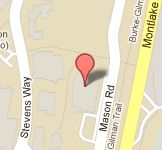
Building Specs
In February 2012, the UW Center for Commercialization’s New Ventures Facility opened at the UW’s Fluke Hall after a complete renovation of the third floor. When renovation of the second floor is completed in 2014, the New Ventures Facility will provide over 20,000 square-feet of office and lab space to UW spin-out companies. Also at Fluke Hall are the Microfabrication and Nanotechnology User Facilities, run by the College of Engineering, which share the first floor, and the W Fund administrative offices which will share the third floor with the New Ventures Facility.
 “The opening of this new incubator signals our commitment to strengthening entrepreneurship at the UW. We’ve been providing the mentorship and are now going the next step in providing the space for faculty and students to work alongside highly successful and experienced Washington entrepreneurs on UW spin-outs.”
Michael Young
University of Washington President
Facility Specs (when renovation is completed):
- 11,500 sq ft of wet & dry lab space
- 11,500 sq ft of office space
- 15 companies can be accommodated at opening
- 25 companies can be accommodated after renovation is complete
Facility Accommodations:
- Wet lab – medical devices, diagnostics, therapeutics, etc
- Dry lab – composites, material sciences, mechanical engineering, etc
- 32 Cubicle workstations
- 8 Private offices
- 4 Phonebooth stations
- 3 Shared conference rooms
- 1 Multi-purpose room
- Kitchenette
- Lunchroom/breakroom
- Full printing/copying/scanning
- Wi-Fi access
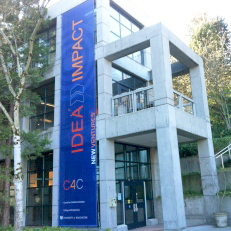
Photos of the C4C New Ventures Facility:


Shared Lab Facilities:
- Autoclave
- Sterilizer
- Glasswash
- Ice machine
- Walk-in refrigeration unit
- Sponsored UW Library access
- CEO roundtables
- Pitch clinics
- Training opportunities
- Networking events
History of Fluke Hall
Named after John M. Fluke, Sr. of the Fluke Manufacturing Company, Fluke Hall was built in 1988 with the intent to foster and commercialize research that would benefit Washington state companies. The 73,000 square foot facility was designed by NBBJ and built by Sellen Construction Company for a total cost of $15.8M. NBBJ’s exterior design tied the traditions of the past to the high tech endeavors of the future. Built into a hillside, the facility’s west wing consists of brickwork and roof elements that conform to the traditional campus. The east wing, overlooking the Burke Gilman Trail and Lake Washington, reflects the industrial purpose of the building. The wing is clad in materials such as corrugated metal panels and stainless steel fasteners. An open concrete circulation spine joins the two wings, running from north to south.